
Italian Princess
One Week Inpatient at Harborview Trauma Center

Looking back, it was among the dumbest things I’ve ever done. You’d think that hopping around, trying to pull on a pair of sweatpants, wouldn’t land you in Harborview Trauma Center. But it did. My daughter heard the crash downstairs. I’d gone down heavy, full weight, on the classically shaped corner of a lovely old antique two-drawer hardwood dresser, fracturing five or more ribs on the right side of my chest (I found out later). With my daughter’s help I tried to stand up but couldn’t, instead shriveling down into a shrieking, screaming ball of pain. “Call 911” was all I could muster.
The medics arrived, asked questions, reached out to me, which led to screaming even louder. One stayed, the others headed off downstairs. They dared not try to move me. The remaining medic started fiddling with my wrist. “I’m gonna inject you with something.” In a few moments a sweet nectar of relief floods my brain and body, sending me high as a kite. “Oh boy, I’m starting to like this!” My benefactor rattled off possible destinations—UW Medical Center, Kaiser, Swedish, Virginia Mason, and a few others. When Harborview arrived, the deal was done. “Harborview—yes.” That’s where all the regional gunshot victims and U.S. Presidents touring west of the Mississippi are sent. I could scarcely feel them lifting me onto a contraption with a seat that shot me down the stairs on a rail, making three or four turns and then depositing me outside onto a gurney that scooted me down the driveway and into the back of a waiting Medic One van. Like one of those rides at a county fair. By then, chemically boosted into orbit, I rose to the comedic absurdity of the occasion—“lose the ‘stache, bro” I gushed at one of the handsome firemen sporting a near perfectly crafted bush of an upper lip who looked down at me—playing to the assembled audience that watched me disappear inside. Two fire trucks, a Medic One van, and neighbors. “Thanks for coming out, you’ve been great!”
Getting carted away in a Medic One van, shot up with Ketamine—check that off my bucket list. “How’my doing?” as we headed south on I-5, checking the reviews. "So we can see them (motorists), they can’t see us? . . .Oh, there goes the Trade Center, the hanging vines, Fred Bassetti’s penis building . . .” (I’d worked as a carpenter helper on the architect’s east Lake Union houseboat with his father-in-law a half-century ago and so knew the skyline nickname that even he’d joked about.) No doubt the van crew was used to such blather. Oy vey, another damaged comedian.
We pull into Harborview and what seems like half of Pill Hill is waiting for us. “Who’re all these nice people?” I drop down among them, as though from out of the clouds. “Boy, I’m on some really good stuff!” earns a few chuckles, this clown still thinking he’s being dropped off at a comedy club. Then again, no doubt they’re familiar with the occasional deluded wannabe entertainer whose eyes are actually open and he’s not squirting blood. All sorts of pleasant, intriguing, and/or triaging faces check me out from different angles, and so I’m feeling kinda special. Maybe a few have played extras on Grey’s Anatomy. Inside, they wheel me past a couple of ladies over there to the left sitting in front of computer screens, which they try to not look away from, unsuccessfully. “Hey! Hi there? How ya doin’? You’ve been waitin’ for me too?” This elicits a couple of exchanged bemused raised-eyebrows, perhaps because I’m actually conscious and trying too hard to impress, which most visitors aren’t and can’t.
Later, I learn that hours had passed before I came out of it—sometime the next day. So probably I was in nothing but darkness overnight up on the 8th floor of the ICU (Intensive Care Unit) in one of the two-bed private rooms. The wife and daughter report that I said a few things and looked around before passing in and out of consciousness with all sorts of IVs sticking in my arms. I must have imagined later on also that what happened next occurred in the emergency room that we had passed by the day before, but I was wrong—yet another of those Elizabeth Loftus erroneous eyewitness account moments? As it turns out, I wasn’t screaming, gunshot, or damaged enough to warrant the immediate attention of an emergency room full of surgeons and nurses. Just a guy who appeared physically intact, spirits unnaturally high. So let him be, for the time being.
The next day I awoke in a kind of “ICU delirium,” which is how a nurse described it to my wife and daughter. At the sight of them overly worried I made matters worse by ranting and raving about being locked up in a madhouse. That if they didn’t do something I was going to bolt for the door, running naked out into the street. Over and over it seems I repeated this same paranoid gibberish. He’s been talking suicide too, the nurses told them. And I kept slipping away and coming back. At one point the monitor alarms went off as my blood pressure or heartbeat dropped dangerously low, this taken by the nurse to be symptomatic of possible massive internal bleeding. My berth immediately filled with surgeons and nurses. I was screaming and carrying on to such an extent that the head nurse had taken the wife over to her station to sign a consent form, explaining that the surgeons may need to split open my chest, and there was the possibility of an artery getting cut. “Do you understand the risk?” When an ultrasound revealed that a lung had been punctured and five ribs or so fractured but not severely enough to warrant opening up my chest, they paused and conferenced; fluid and blood had accumulated in my lungs but not to a precarious level. So I was sedated and two surgeons cut a hole in the upper right side of my chest to insert a tube. Before they did so the lead surgeon suggested that my wife and daughter step outside as there was going to be quite a blood bath. What happened next was completely lost on them and me but it seems that following the incision and insertion the surgeon hooked the other end of the tube to some sort of square clear plastic machine. Later I learned that it would eventually suck two liters of blood from my chest. Over the next three or four days it followed me around everywhere like a faithful puppy.
Remarkably, they performed the surgery not in some emergency room but right there—eight floors up—in the ICU berth where I had spent the night in a heavily sedated stupor. About this I remember nothing. But I do recall what happened next—or rather, what happened during the surgery, when I was supposedly “under”—this time rather vividly. In fact, over the course of approximately an hour or so something rather extraordinary happened. Shit happened. Or, rather, Hell happened—better yet literally, or metaphorically—as though I’d been thrust onstage into a bizarre alternative scene from the musical Hamilton—into the room where it happened. The Hell thing.
Harborview vanished, except for a square light fixture with a bar splitting it into two white panels set at different angles hovering above me on the ceiling, along with a silent loudspeaker laced with small holes in concentric circles. Confirmation that this was in fact the case came weeks later during a visit to my usual Kaiser Permanente clinic. I pointed out the very same light fixture on the radiology lab ceiling to the technician performing the X-rays, she quite understandably pretending to find this of interest.
Later, I also learned that what happened next transpired over the course of approximately an hour and ten minutes. I vaguely recall asking and hearing just afterwards that I had been “under” for ten minutes, but that seemed an abbreviation. For aside from minor temporal details what came down next felt like an eternity. Literally. And it crushed me, like a sledge hammer. Or as with that Looney Tunes cartoon character, the road runner, who occasionally got flattened, I’d become road kill on a desert highway to Hell—with a big boulder on top of me and a smirking coyote licking his chops over by the side of the road.
Yes, I’d absconded elsewhere—an expression usually reserved for gods. And then too, all of a sudden, seemingly out of nowhere, he or it appeared, or had been waiting for me, over there—directly opposite, across the gurney from me—no more than a body length away—a large porcelain head that I’d never seen before. What on earth? Better yet, what the hell? How to describe this thing? Imagine a freckle-less Howdy Doody or Alfred E. Neuman combined with a Salvador Dalí La Casa de Papel mask, all in one sheer gloss figurine of a bust suspended in space. Hovering but not moving—right across from me. Not looking, not blinking, not doing anything. As though I was at a futuristic MoMA exhibition, this thing looming across the wayside from me—absolutely still, emotionless, the vivid colored sections and edges of him sharply, flawlessly etched. This ageless, almost mocking mannikin of a man-boy was just staring off somewhere, not really looking at me or making eye contact, perhaps also having shared a residency at a wax museum as “The Unknown Boy” before he escaped. And so now here he was. What is more, to the right of him wafted dark wraith-like beings that shredded and recomposed themselves as they flitted about to and fro, over and around me, emitting all sorts of shrill shrieking sounds. Behind and to the sides marched armies to and fro over landscapes off in the distance, cadenced by agonizing cries both near and far way, spiraling at me from all directions. A phantasmagoric smorgasbord of sounds and imagery that filled me with despair. All this requiring no reflection, no pondering, no guessing, for almost immediately I knew that I had died and gone to hell. Or perhaps I was malingering first in the way station of Purgatory, catching glimpses here and there of what would follow in due course. For what else could it be? Only later could I begin make sense of it, when I was far away from it. But certainly not then and there
Aside from the porcelain manchild, it was the Hell that my First Baptist Sunday school teacher had so vividly sketched for us wayward incontinent youths nearly a half-century earlier. Of course I would now spend an eternity here, riven by the images and feelings of utter desolation and anguish. Yes, this was Hell all around me and I would stay forever, wallowing in never-ending pain. And forget whatever may have deposited me in this place, that whatever now largely pointless to even speculate about—irrelevant. Because there was now no going back. I was burnt toast. Irretrievable, irredeemable.
I looked across at the porcelain head, absorbed the imagery and sounds swirling around me. My entire identity and history had been wiped clean. I dissolved into an eternity of nothingness. I was in Hell and would never escape. Whoever I had been was gone in an instant, as all the doomsayers had forewarned. This porcelain boy God stared across at me and I blinked. I would hurt like this, like hell, forever. Oh my God. They were right, after all.
And then all of a sudden, it vanished, in another instant. Gone. And not a bit lingered on. Nada. As vivid as this alternative world of Hell had been, I returned to where I actually was—it equally, or even more, vivid as hell, pardon the expression. As though some sort of recalibrating, restoring hand of reality had swooped down and waved all that away. Wow, reality, with a real nurse beside me and a surgeon walking away, his work completed. For what I then saw and heard washed over me, as though for the very first time—having grown even more breathtakingly clear and crisp than anything I’d ever seen or felt before. I knew right then and there that it had all been some sort of awful dream or visitation. And so now how real and beautiful this Harborview ICU berth that surrounded me suddenly became. The monsters, the pain had absconded, as had the cosplay porcelain manchild. I looked about, absorbing, relishing every detail, like a virgin, again, for the very first time. Clear, concise, colorful. It’s a wonderful life—my senses confirmed: so rich, real, and brimming with meaning. More real than real. An extraordinary moment!
Upon later reflection, this experience the exact reverse of that Civil War story (a short film actually, I recall, that was shown in one of my undergraduate literature classes) wherein a captured and condemned Union soldier stands on a Confederate gallows, noose around his neck, hallucinating a possible rescue by comrades who suddenly appear, freeing him to run through a beautiful meadow—wife and children beckoning in the distance—welcoming him home, bright beautiful images festooning all about him. And then, just before he reaches out to touch them, the trap door of the gallows drops open, sending him plunging down beneath the platform, snapping his neck, turning him into a slowly twisting corpse in the dusty darkness. Never to see them again.
Just like that, only the opposite—for upon liberation from my hallucination I actually reach out to my wife and daughter. And there they are, after all—waiting! Celebrating my awakening to a starkly different reality, an ICU berth blooming with color and life—the porcelain manchild monster gone, along with an eternity in Hell. And not a moment to lose, as time seemingly moved quickly on, not wallowing in what might have been, in coulda, woulda, shouldas. I recall the fam coming to visit and my assigned nurse examining and adjusting the various tubes that had been inserted into my arms. What we all said to one another escapes me. Eventually everyone left and I was alone with one other patient in the other berth. Later I learned that I had spent a couple of days in that private double-room, and then was moved down the hall to what might be described as an open hall of ICU berths, each cordoned off by curtains drawn around their occupants. I found myself in a technological marvel of a bed with three separately adjustable levels that were controlled by push button controls located on each side of me. In time I learned to work a phone that could both signal the nurse station and reach the outside world. Although I couldn’t stand up and could just barely move, I had survived, was alive.
I conversed over that phone with the wife and daughter at home. As bright and promising that initial return from Hell had been, the pain and the prospect of remaining in what seemed like a helpless condition proved so overwhelming initially that I had concluded that perhaps I just couldn’t bear or “make it.” I warned them—ready yourselves for the only two choices and outcomes that I/we appeared to confront. For they were either going to have to spend virtually every moment with me to pull or lift me through this experience or I just couldn’t imagine going on like this. No way lying there all day, day after day, in that gurney. I just couldn’t imagine surviving it.1 Only two options presented themselves, no other. No doubt this conjured up very unpleasant memories from decades ago when we had all gone through a few years of equally dire emotional episodes. Fortunately, I could recant that two choices ultimatum the next day. Phoning from my gurney: “Remember what I said yesterday? Those thoughts are gone. I’m feeling entirely different today.” Obviously that raised everyone’s spirits, for as bad as it all seemed there actually was hope, we can do this, I can do this. But getting through this was not without its challenges. Two or three months later I was played the surviving recordings of some of those phone calls. Because I had lost all track of time, calling at all hours of the night and day, I was climbing up and down an emotional ladder, driving everyone crazy at times. Alternately ridiculous and hilarious. But we worked through and survived it, however absurdly ungracefully at times.
In the main ward, my small berth was set off from other ICU patients by almost ceiling-high curtains. I had no idea what existed beyond my berth. Sounds were the only clue. At moments I could see through breaks in the curtains when my nurse came with the “pain meds.” I was told to order food off of a small folding menu thru the corded gurney phone but I refused—no way. For a couple of days or so I ate nothing. One nurse, whom I came to think of as “the little dictator,” gently scolded me. There was a large round clock on an opposite wall but I only caught occasional glimpses of it. I no longer had the window of a private room and so I would wake at times not knowing if it were night or day. The hall lights were turned off for what seemed like hours or days at a time. When they were fully on I guessed it was daytime. There was a TV on an arm extending from the wall but it was set at an odd angle that made viewing difficult. I was given an arched/angled plastic bottle to urinate into, cap, and then leave for the nurse to empty.
That first night out in the main ward was a virtual nightmare. What surrounded me, out there?And was it evening? Midnight? Or early morning? I could only squirm in my gurney and interpret the sounds. I periodically dozed off but from somewhere out there the nurses on duty often engaged in loud conversations. One voice in particular, that of a fellow from New York, droned on for hours. He talked about jobs at hospitals across the country, the type of contracts involved, the conditions and situations of them. Seemingly hour after hour, this annoying droning New York accent. But obviously someone must have been listening to him. There were others too, also sharing where they had been, the jobs, the travel. Altogether, it grew maddening. Didn’t they realize we were trying to sleep? And it went on and on for what seemed like all night, right there in the ICU ward. How many others were forced to listen to this? But I guess I and others had no sense of the actual time. Morning? Midnight? No clue—at least I didn’t. And yet, why these conversations—loud and annoying, largely about money, work conditions, jobs, personal histories, as though none of us could overhear them? Were they eating dinner or just passing the time, shooting the bull?
Michael, the New Yorker, paused for a moment, and the ward actually fell silent. Into the void rose another voice, loud, insistent.
“Stop talking! We’re trying to sleep! Why are you talking!”
The voice came from what seemed like across the hall. Perhaps from an older lady. I joined in with admonishments of my own, supporting her.
Then she continued: “Yes!! How are we supposed to sleep when you’re talking so loud?”2
More silence.
I ventured: “Who are you?”
“Audrey. Who are you?”
“Michael, nice to meet you, Audrey.”
I continued: “Is there anyone else out there? Anybody?”
From down the hall: “I’m Eric.”
“Hi Eric!”
The three of us continued talking back and forth, sharing our confusions about the ward and what we had experienced so far. As Audrey put it, we seemed to be in some sort of “madhouse.” Where were we and what was going on? Why all this chatter “out there” when we were trying to sleep. And who else was “out there?” Were we the only ones who’d been hearing all this? WTF?
That broke the ice. As it turns out, Audrey was right across the hall from me. The next morning I leaned to the side and we saw each other for the first time when her nurse parted the curtain a bit. She was quite an older woman and blossomed into a huge smile when I said “Wow, there’s a beautiful face.” That got her flirting right back with “Mr. Handsome” across the way. And we began to meet others too, exchanging salutations for the first time. Subsequently, we all—along with many of the nurses, PAs, and surgeons—got to know one another rather well, and over the course of the next few days grew to understand and appreciate the situation we had all been thrown into. There were so many of us and them that I soon resorted to nicknames to help remember and greet them accordingly.
First came Audrey (Hepburn), the Italian princess. 91 years old, spry and witty, in spite of having broken a rib or two in a fall in her very posh apartment in Tacoma. She had spent two days and nights alone on the floor before anyone found her. I still have no reason to discount or question the veracity of the personal history she related over the next few days, but it is in any event worth retelling nonetheless, as it illustrates so much about Harborview.
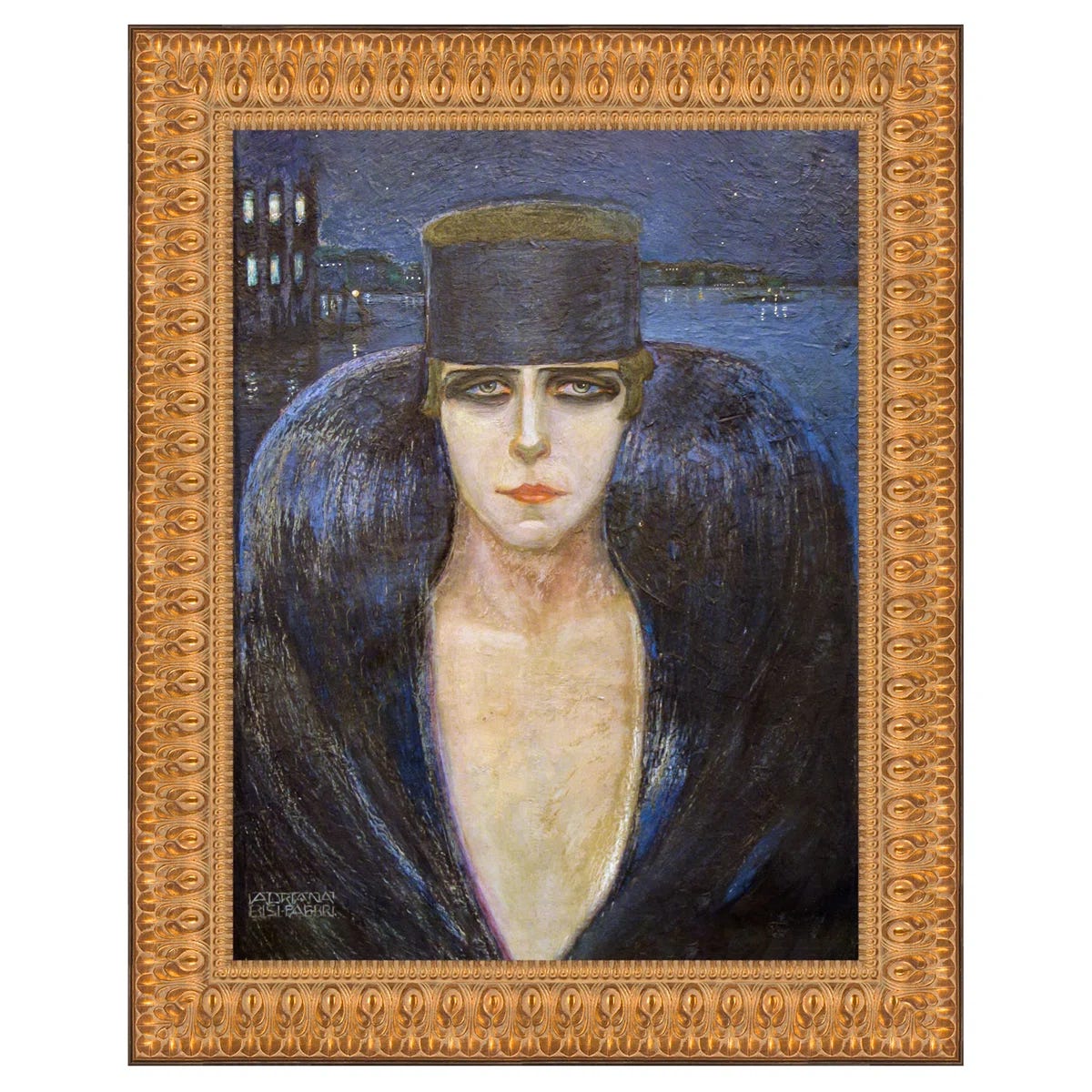
Audrey grew up in an aristocratic family in Italy. She remembers her first taste of Italian wine at the age of three on her family’s vineyard. Together on the same boat with the King of Italy, her family escaped Mussolini at the beginning of World War Two. They settled first in Edmonds, Washington, of all places, and over the years created two successful businesses farther south in Tacoma, eventually becoming quite wealthy. I never inquired further about her surname or additional details as she wanted to talk about almost everything else besides herself. She was extraordinarily kind and appreciative of the attention provided by the nurses (it was constantly “dear” this and “dear” that), but she had characteristicly cranky moments also. Unfortunately, she was moved to a new berth up and around the corner from me after two days and we didn’t get to talk again until I finally graduated to a “walker” the day before my release. I did occasionally hear her screaming in pain when nurses moved her for certain procedures. I would recognize that voice and those screams anywhere, and she no doubt mine.
Into Audrey’s old berth came Mr. Bojangles. I caught only occasional glimpses of him at first, through cracks in the curtain, until the nurse left a wide swath open into the hall, directly opposite me. Privacy wasn’t any issue because this older black man was unconscious, strapped with an oxygen mask, and riddled by tubes and sensors. His vital signs appeared on a screen above his gurney. It wasn’t until the second day or so that his eye lids finally began to flitter open a bit, suggesting that he may have begun sensing the light thrown his way by the hall fixtures. My nurse told me that he had been found on the street somewhere, face down, barely alive. In his comatose condition, none attempted to offer him food or drink and perhaps he was receiving fluids through the tubes in his wrists or arms. One nurse appeared to hover over him off and on during the course of the day. These were sessions where she would hold his hand and touch parts of his face and ask him to respond in certain ways. As she moved from one feature to another I heard her say, almost in a whisper, in succession, “Can you feel my hand?” “Squeeze my hand.” “Raise your eyebrow.” “Open your lips, now, when I touch your lips.” She encourage him to respond, caressing features of his face, gently moving her fingers from one to the other. One might think he was her father or a close relative. Clearly she was not robotically moving through a checklist list of things she had been ordered to complete. Genuine concern, if not affection, radiated all the way across the hall. The day after I could see that his eyes were beginning to open, widening into slits; he was starting to look out at this new world. The nurses began moving him this way and that and were asking him to contribute to the movements. He was looking at them, perhaps even wondering who they were. Daughters? Angels? One put a straw from a cup of water next to his lips and asked him to “try to drink this, try now.”
One berth over to the left was Easy Rider, a middle-aged, perhaps even younger, women who had been struck by a (the notorious “white”) Tesla making a most likely illegal U-turn in front of her as she sped up the roadway on her motorcycle. Up and over the Tesla she went. Then airlifted by helicopter from an island across the Sound. Given all that, she was up walking, albeit slowly and painfully, to and from the bathroom—surprisingly so, as she was battered and skin broken, her face various shades of black, blue, and purple. Walking wounded, as though having survived the battle of the Somme. Not easy on the eyes as she limped by, but at least she was up moving about, which I was a couple of days away from. Then too I couldn’t avoid overhearing the discussions with her gay partner and one or two friends about the choice of a lawyer, followed by an eventual meeting over “Zoom.” What appeared at first rather straightforward had turned more complicated, as there were possible extenuating circumstances, such as whether to accept the insurance company’s offer or to press forward with litigation. These were very thoughtfully managed negotiations, no ambulance chasing. And all this went on for two or three hours. Somewhat ironic that she worked at another local hospital up on “Pill Hill,” where we languished. Most likely the drill was familiar.
Across from Easy Rider was Tommy (Tuberville), a lumber mill owner from eastern Oregon, who’d been lucky to score a window berth. No doubt he still missed the light filtering through the trees. Early on when Audrey and I were grousing out loud about our incarceration in what seemed at first an insane asylum, Tommy’s only complaint was that he wanted to go home. From the sounds of it, his was more a planned visit for a scheduled back surgery. It had gone well and full recovery likely, but he was getting antsy. Just before he left his son and grandson, all workers at the mill, couldn’t help but heap on additional complaints to the effect that “if the government gives something for free, there’s a scam involved.” Familiar backwoods animus.
The more I got to know the place, the more my opinion changed, drastically in fact by the end of my stint. Covid had wreaked havoc on staffing and care everywhere, but perhaps less so at Harborview. Because my sister’s daughter was a “traveling nurse” with a couple of trailer homes strategically located in other parts of the country, I wasn’t surprised by the two or three nurses who just showed up seemingly out of nowhere—Andy (Griffith) and Laurence (of Arabia)—although when I talked with them about the sort of training they had received the details were not immediately forthcoming, seeming a bit sketchy at times. One or two got a little defensive about it.
By and large, the nurses or attendants were extraordinary—caring and helpful, although working under trying conditions. Upon my release two weeks before the Holidays (I had completely missed the Turkey one), we returned a couple of days later to floor 8 bearing gifts for the staff.
Take for instance my main nurse, Sheila (E), who after a couple of others had come and gone just seemed to take over my life. The rest were thoughtful and caring—although one, The Little Dictator, was, well, dictatorial at times; she wouldn’t let me get away with anything (although the wife and daughter loved her). But Sheila E made everything better just by showing up in my berth. Every couple of hours I caught her spying through the cracks in the curtains; and I could sense her hovering even when she wasn’t. Because the one set of pills—two 5mg oxycodone (an opioid analgesic) that I was given because my pain was so severe—could have devastating consequences if improperly administered, lowering my heart rate too much, she was constantly monitoring my vital signs. These two tiny tablets seemed to buffer my pain nicely; an additional one or two could very well have killed me. We discussed everything as though my life hung in the balance. When she tried something new and I started to feel any strangeness she immediately took me off it. She listened intently to everything I said and asked about things that never occurred to me. We were genuine partners in my recovery scheme. She, my guardian angel.
Victor (Mature) too, (originally from Ghana?), my other main man angel. When it was time for a CAT scan he would trolley me up to the 9th floor, I believe, and become my soothing partner in pain. Above the flat launch pad that fed you into the CAT “worm hole” loomed an overhead crane that was employed for those whose pain was too great for them to move themselves or be moved sideways onto the conveyor belt. The crew rocked you back and forth on your gurney to slip a canvas sheath underneath that wrapped around you and was drawn together by handles on the sides that the fork lift grabbed onto. Kind of like one of those fireplace log carryalls you see in L.L. Bean catalogs. When they pushed a button the crane lifted you up and over, but it also squeezed and compacted you like a “totaled” car at some junk yard metal recycler. As we humans aren’t scrunched cars, there was nothing to do but scream like hell, which I did every time. On our final trip upstairs Vincent and I decided to take matters into our own hands. “Ok, let’s do it ourselves this time.” So I gave him the “Ready? One, two, three—go!” and over I went, shrieking like Wilber the pig in Charlotte’s Web. But we managed it, as we usually did with most things Harborview. Fist pump. “Victor”[y!!!].
Since I wouldn’t be able to take a shower at home for at least a week or so, the last day I asked Victor to give me one of those shampooings I had heard about from others, He brought three towels and a bottle. To this day when I get out of the shower and towel off I can still feel those hands buffing my head with a towel, scalp tingling all over once again. Victor, my other Harborview guardian angel.
And last, but certainly not least, I regret not having a nickname for the older woman who was the final nurse to draw blood samples from me. I’m remembering her as another, albeit smaller, angel this time, one with a weathered and creased mahogany face who reminded me of that Jimmy Buffet song, Barefoot children in the rain, where out in the Caribbean “wrinkles only go where the smiles have been.” I told her that although most have trouble finding my veins I knew she could do it, sensing it right away by the way she turned my hand over and tapped my wrist. As the vial filled, she responded: “Yes, it’s my passion.” Where else but Harborview? Drawing blood, a passion. Yet another pair of wings earned.
On Brains and Trauma
But by no means was this the greatest trauma I’d ever experienced, having written elsewhere about an earlier occasion a quarter century earlier that had been equally severe and traumatic3 although of an entirely different nature. That crisis had proven overwhelmingly complex and years in the making while this one came on suddenly, accidentally, the result of a fluke that could have been easily avoided. The blame for the first can be shifted elsewhere, not so the second. The latter, due to an act of sheer stupidity and gracelessness, betrays a flat-line learning curve tempting fate. And so while the first trauma had been multi-dimensionally complex, the second was a good deal simpler, more explicable and obvious. Or so it might seem at first glance.
By that I mean that although this time we are talking trauma induced by one dimensional unbearable physical pain—with a few obvious emotional side effects—the experience actually proved equally complex. Hence the irony. For how could something that hurt like hell bring on something so strange, this accompanying vision of hell, with that porcelain manchild of a god thrown into the mix. Where’d that all come from?
As is likely evident, I’ve now had some time to dwell upon the meaning and significance of my experience. Online, of course, one finds assorted accounts of persons who have claimed to have gone to heaven, basked in it, and then returned to tell tall tales about it. And yet the conclusions I’ve reached about my own hallucination surely applies to such travelers as well, as will become increasingly apparent.
So what can possibly explain such things? No doubt there are Christians who would argue what appears obvious to them—that I had just received a foretaste of what lies ahead for backslidden non-believers like me. Perhaps God was sending a message, offering a preliminary glimpse of what is to come, trying to scare the wits out of me. To reform me. Because He actually loves us—loves me—and was dangling a second chance before my malingering undeserving soul. Repent prodigal son, return to the fold. Then again—or better yet—forget this benevolent forgiving God and last chance Texaco Purgatory trope, wherein you’re given a glimpse of the wasteland ahead, can refill your tank with grace, and head back in the opposite direction, sins forgiven. No, no, no—upon hearing my story others more religiously-inclined might instead insist that I had in fact dangled one foot in the pond of actual hell, the genuine article, and that the Harborview surgeons had merely pulled me back from the swamp, before it was too late. One stray bullet dodged. Indeed, before I actually returned I could have sworn that the latter pessimists were right. I was toast. About to spend an eternity with televangelists. Gulp.
Two possibilities. One even more likely than the other, perhaps; and here’s why.
All things considered, I suspect that my brain was trying to make sense of the trauma. It was searching within itself for clues as to what was happening, what was I actually experiencing, and why? In essence, my brain was reaching back for clues to frame and interpret the trauma, to give it meaning and significance. My brain was straining to explain or translate the cascading rush of pain in one portion of itself to another much larger, more all-encompassing, interpretive part of itself. Most likely it was simultaneously drawing all the evidence—the various sensations and triggered memories—together into an understandable whole. My brain was working overtime.
During my first check-back appointment at Harborview I shared what I’d undergone with an examining surgeon whom I’d just met for the first time. By the way, I was just wondering—was mine a common reaction to trauma? Or just limited to my own particular circumstance and case—to my own personal physical idiosyncrasies and to that particular injury? Then again, more broadly, had he encountered others in a similar situation who talked later about having gone to hell and back? Well, yes, he immediately responded, in fact he had, and from a wide range of backgrounds, not just Judeo-Christian. Unfortunately, we had no time to explore the matter further.
In my own case, consider the personal and cultural background. Apostate agnostic/atheist. Partial evangelical Christian childhood, likely unconsciously burdened with a deeply-embedded memory of one First Baptist Church Sunday school teacher (the town’s high school basketball coach and I an impressionable convert—an aspiring future college basketball player) terrifying his class of 6th-graders with an account of the eternal hellfire awaiting sinners who strayed from the straight and narrow. A bone-rattling assault. No doubt my brain reached back to retrieve the memory, joining it with a more recent, deeper cynicism, to produce the seemingly mocking porcelain figure, all this set within a wasteland of Hell backdrop. And so having heard religion ridiculed for most its life,4 the best my brain could do to make sense of overwhelming trauma was to transmogrify that joked-about possibility into a blasé pasty-white Howdy Doody of a gatekeeper welcoming me to an eternity in hell. Then too I saw off in the distance images from Leonardo’s Mona Lisa, scenes of turbulence that may serve to account for the mysterious ambiguity of her smile. Armies of Jesus marching back and forth over the landscape? Perhaps I was also thrown back upon Stephen Dedalus’s blood-curdling chapter-long account of a rector’s vision of hell in James Joyce’s A Portrait of the Artist as a Young Man. I’ve just now read it over again and can understand how it must have lodged itself in memory—the terrors of hell awaiting that cynical author, and me.
My brain pulled all of these fragments together into a throughly convincing scenario. I was to spend an eternity in hell, with no possible escape. No matter my adolescent conversion experience at Black Lake Summer Bible Camp. No matter my evangelizing up and down Harvard Avenue, atop “snob hill” in the small logging town of my youth, waving an abridged paperback version of the New Testament in the air, not a passerby in sight. No matter the impressive resumé, backsliding had wiped that credit history away, culminating now in the ultimate wages of long forgotten sins. I’d finally run out of second chances, of perpetually kicking that can of fate farther down the road of life.
Or so it seemed, until—voilà—I did escape! Brilliant light! All of a sudden! The dreadful veil of eternity rose, porcelain head absconding, along with the mythical, vengeful, jealous Judeo-Christian God that has malingered over all too many of us for altogether too many centuries. Gone in an instant. Swallowed up and replaced not by darkness, but by brilliant, brilliant light! For I was back in the real world—a brighter, crisper, even more crystal clear and detailed world than I could have ever imagined. A wonderful world indeed!
Left with yet another lesson in the mysterious, yet ultimately understandable, workings of our brains. How trauma in one part of the brain triggered another part of the brain’s filtering lucubrations, that temporary internment in Hell having all been part of a ruse played by my brain upon my brain to try to make sense of the trauma. For it had dug deep into its own mnemonic reservoir and pulled out a most meaningful and significant scenario.
And yet in this case consider also that my unconscious brain, left to its own devices, failed me miserably—having fooled itself into thinking, convincing me, that I had indeed been cast into hell, which fortunately proved dead wrong. But of course that erroneous conclusion made sense to it. Based upon its own mistaken calculations it had conveyed to itself the worst possible outcome, the worst imaginable trauma—simulating, and perhaps even exceeding, the pain that I was actually experiencing. Thank goodness we both were spared. And we both have lived on, although perhaps only one side—the conscious side—of the imagination has proven better off for the experience, the experience having imparted an unforgettable lesson. For I suspect that our unconscious brains don’t in fact learn from experience. It might seem that no self-correcting mechanism intervenes to detect, appraise, and correct mistakes. Yet one wonders how that porcelain head could have arisen solely from a consciously-retrieved memory, for I’d never seen or encountered it before. Ever. Could it not be construed as an innovation on the part of the unconscious, a piecing together of various fragments of memory into a unique creation? A work of art? In this instance, the unconscious demonstrating a kind of learning?5
And yet, all told, the owner of this conscious brain is reluctant to tempt fate, not wishing to explore or encourage further experimentation. In other words, would another equally traumatic experience cast me back into another imaginary hell? Or someplace else? Or has my unconscious brain had enough of all this? Has it learned anything? Indeed, now that it’s gone through the drill, might it be satisfied moving on to better things—a premonition of eternal know nothing, feel nothing darkness, maybe even just plain old nothingness, content with the eventual returning of this future bag of bones back to atoms and molecules, after another round of another billion years, back and forth from the cauldron of yet another exploding Supernova, where we all began, momentarily grateful and satisfied that we’ve now accumulated some understanding of what won’t come next, perhaps even looking forward to the extinction of that also. A host of possible outcomes that no one, most likely, will ever know, or reflect upon. Then again, maybe not.
Actually, at the moment, having already dabbled my toes in the various respective waters of trauma, I’d rather not know and suspect that no one ever really finds that out. And I can live, or die, peacefully, knowing precisely that.
Spare me and us the additional lessons.
Interventions
Obviously I was semi-conscious under a Harborview surgeon’s knife. But during it all I recall no comforting words, or any attempt to communicate with me. Might such conversation have mattered, or made an impact or difference? During the ride to Harborview, I recall being asked a few re-orientating questions, essentially: did I know who I was? Where I was? What had happened? These presumably to assess my state of mind. No doubt emergency vehicle crews and ICU personnel routinely engage in such checklist banter. Does he have any idea what’s happening, who he is? Or is he clueless?
No doubt again at the Trauma Center—action, not talk, was/is of the essence. Nurses and doctors have surgical business to attend to, which makes sense given that most patients arrive unconscious. Chatter directed at patients serves no purpose.
Yet then again in my case, and in cases vaguely similar to mine, perhaps something a little different might be called for. Recall the nurses prompting, attempting to communicate with the seemingly comatose Mr. Bojangles. What I would have given during my descent into hell for something similar. “Michael, can you hear us?” “Squeeze my hand if you can hear me.” “You’re at Harborview.” “Are you seeing things?” “Anything strange or frightening?” “Squeeze my hand or say yes if you are.” “Don’t worry, you are ok.” “You are nowhere else but in a hospital.” “We are nurses.” “I’m a surgeon who’s doing a little bit of work on your chest.” “We have done this hundreds of times, so no worries.” “If you are feeling or seeing anything really strange, tell us, it will go away very soon.” “So just hold on, you’re going to make it, you’re going to be fine.”
In other words, something to that effect might have worked wonders for me. I wonder also how many others have suffered through such absolutely terrifying moments. And then too some might question whether or not there’s actually any point trying to succor or redress the emotional “side effects” of trauma. What’s the actual clinical value? Would doing so increase the prospects for survival or speed the recovery? Or do we just work through or tolerate such moments as the inevitable collateral damage of trauma itself? As with PTSD (Post Traumatic Stress Disorder), do we just deal with it later on, after the fact?
Then again, perhaps emergency room nurses and doctors have already developed or been trained to add such “proactive” emotional comforting to the mix of purely physical technical ICU interventions. And yet since I was actually partially conscious at times—looking up at the light and the loud speaker fixtures and also seeing the shadowy forms of the surgeons or nurses hovering over me—I recall no attempts to engage in any such communication. A couple of days later I did begin a conversation with the head nurse (Barbie) of the 8th-floor ICU, where the surgery was performed in one of the bays no more than a stone throw away from her station. From her I got the impression that there were no such protocols. Trying to talk or walk a patient through the emotional aspects of trauma treatments appeared a foreign concept. Indeed later when I returned for a final check-back appointment at Harborview with another pulmonary surgeon (mentioned above) this gentleman talked about an organization that was attempting to address such things, to the effect that “Yes, we don’t do enough to link the emotional and the physical aspects of hospital care.”6 That got me going on the Vancouver B.C. trauma physician Gabor Maté’s closely related book, The Myth of the Normal. That he asked me to repeat the title was encouraging. During that final appointment this surgeon was shadowed by what appeared to be an intern in training. When he placed the stethoscope on my chest in several places he would ask the shadow intern to take turns listening as well, “Do you hear . . . ?” Again and again, it was all hands on each time he observed or checked something out. When he stepped out to see if the X-ray from Kaiser had actually shown up, I asked, “Is he your mentor?” . . . (“He is for many of us.”) . . . “You’re lucky.”. . . (“I know.”)
All told, Harborview Trauma Center represents the gold standard, a model of how to create a social democratic hospital system both within and outside the institution itself. In this sense it is very European, very much what American health care and society at large sought seek to emulate: universal caring for those in need, regardless of the ability to pay. In my own case, no one even troubled to ask whether I had insurance coverage prior to my treatment, although, after the fact, we were generously taken care of by our Kaiser Medicare Advantage program. Not so others around me, although as I understand it an altogether different allocation of debt forgiveness kicked in for many. For Harborview, overseen by the University of Washington and King County, is a publicly owned and operated service comparable to universal single-payer national health care systems found elsewhere throughout the modern Western world. The major difference is of course that my own debt (@$113,000—our liability for which was $1,000), handled by Kaiser, represents a major portion—along with the contributions of other patients with similar private insurance plans and Washington State tax payers—of Harborview’s operating expenses. H.T.C. is where suffering, cruelty, inequality, and indifference go to die. Where novice and expert work side-by-side to effect treatments and cures. Accordingly and assuredly, should anyone wonder where our tax dollars go? In this one case, to a social democratic dream.
The larger point here being that we could do much worse than simply rubber stamping the H.T.C. model nationwide. Unfortunately, we do in fact just muddle along, the wealthiest nation in all of history, accepting third-world quality health care as the best we can do, along with refusing to engage so many of our other national maladies with a Harborview-like social democratic sensibility—with a passion, as did my Harborview blood-drawing guardian angel.
Finally, no doubt indicative of the times and the challenges we Americans face, at the end of my weeklong stay, as I was waiting in a wheelchair at the main entrance for the wife to retrieve the car from the parking garage, there was some commotion out in the street. Just opposite, outside the window, I saw a man literally dragging another man along the sidewalk. As he passed through the entrance checkpoint it became apparent that one had been shot and the other was helping him inside.7 The gatekeeper employee, saying next to nothing, merely pointed the direction to Emergency. A moment later a police officer stood next to me on a cellphone, calling out the license plate number of a car hastily abandoned across the street. More trauma. And so routine, in fact, that not even a siren ushered them inside. Here in the American wonderland, this ever-percolating cauldron of trauma. So what else is new?
For some strange reason—most likely because the two men were African-American, the lyrics of Randy Newman’s Sail Away come immediately to mind:
In America you get food to eat
Won’t have to run through the jungle and scuff up your feet
You’ll just sing about Jesus and drink wine all day
It’s great to be an American
Ain’t no lion or tiger, ain’t no mamba snake
Just sweet watermelon and the buckwheat cake
Everybody is as happy as a man can be
Climb aboard, little wog, sail away with me . . . .
In America every man is free
To take care of his home and his family
You’ll be as happy as a monkey in a monkey tree
You’re all gonna be an American
Sail away, sail away
We will cross the mighty ocean into Charleston Bay
Well, for no strange reason actually, events almost automatically trigger associations in our brains. The frontal cortex works overtime trying to make sense of them and restore order. Black man shot and bleeding; Sail Away slave trade song. Breaking my ribs; porcelan boy-god, Purgatory, and Hell. Harborview Trauma Center present; evangelical First Baptist Church past. Connections, meaningful and significant. Aside from my own sheer clumsiness, both equally American culturally-contrived-and-induced episodes; both deeply culturally embedded. Same old drill.
And so, riffing off the Charleston Bay theme, no one in universal healthcare-free America is actually free. That just one of the missing freedoms in the Iron Cage that enslaves us all. Indeed again, aside from the recognition of the obvious Iron Cage that enslaves us all, observe how the brain engages traumatic experience, no matter how incidental or coincidental, coaxing all sorts of meaning and significance out of deep wells of personal and cultural memory. The most mentally active portion of our milieu intérieur, as Claude Bernard might put it, stands poised, ever ready to pounce on and make sense of most everything that befalls us. Literally, to almost die for at times.
In retrospect, of course, I wish I had had the late Jonathan Raban’s posthumously published memoir, Father and Son, at my bedside. His account of the drudgery of his own rehabilit-ation from a stroke in a hospital also here in Seattle, and much worse situations endured by other writers and academicians—Tony Judt, in particular—would have put my own comp-laints on the back burner of shame. (Colin Thubron, “Hard Solaces,” in The New York Review of Books, 2/8/24.)
Timothy Snyder had a similar experience in a New Haven hospital: “Two policeman sat just beyond the curtain, observing two wounded young men. With nothing much to do, the cops moved closer together, just in front of the curtain, and loudly talked the night away.” (Our Malady: Lessons in Liberty From a Hospital Diary, Crown 2020, 25)
Life’s A Shit Sandwich: How To Survive Depression & The American Way of Life—A Field Guide for Beginners (2024). {In submission}
As appropriately captured by “. . . . [the poet] Philip Larkin’s ‘Aubade,’ in which Larkin describes religion as ‘that vast moth-eaten musical brocade/Created to pretend we never die.’ ” Op. cit., Colin Thubron, “Hard Solaces. . . ,” p. 38.
And more broadly with respect to these kinds of interactions in general: “One of the most important features of the immune system is that it can learn and remember, a kind of biological intelligence that is rivaled only by the brain. And just as they are with the brain, researchers are attempting to replicate this intelligence artificially, by creating an AI called Artificial Immunological Intelligence (AII) that will improve our understanding of the immune system and could be used in computing to prevent malicious invaders doing harm there too. The brain’s intelligence is embodied in connections between fixed neurons, whereas the immune system’s is based on transient interactions between mobile immune cells. The principle is the same, however, and both can be replicated in a computer program.” (Graham Lawton, “Can We Create and Artificial Immune System?” New Scientist. Sample edition. 1/31/23.) {emphasis added}
Reflecting upon this later I was reminded of one of my mentors, Stephen Toulmin’s constant reference to the great French physiologist Claude Bernard, a pivotal figure who turned medicine away from a then common view of one-dimensional “vital forces” coursing through a “common sensorium” located in the brain to a more wholistic conception of mind and body as a “milieu intérieur,” or a cooperative system working in unison. More recently I came across similar concerns in a review of a book about free will, as these days a good many distinguished academicians have gone on a rampage of free will denial—claiming that it is in fact an illusion. The author under review “. . . . makes a powerful case that the history of life, in all its complex grandeur, cannot be appreciated until we understand the evolution of agency—and then, in creatures of sufficient complexity, the evolution of conscious free will. Mitchell is one of a new breed of biologists who espouse a complex-systems perspective as an antidote to reductionism. . . . Mitchell proposes what he calls a ‘more naturalized concept of the self.’ We are not just our consciousness; we’re the organism, taken as a whole. We do things for reasons based on our histories, and ‘those reasons inhere at the level of the whole organism.’ Much of the time, perhaps most of the time, our conscious self is not in control. Still, when the occasion requires, we can gather our wits. . . . selection employs goals and beliefs built from experience, stored in memory, and still more or less malleable. . . . [All told] ‘The various subsystems involved are in constant dialogue with each other, each attempting to satisfy its own constraints in the context of the dynamically changing information it receives from all the interconnected areas.’ ” (James Gleick, “The Fate of Free Will,” a review of Kevin J. Mitchell, Free Agents: How Evolution Gave Us Free Will, Princeton University Press, 2023, in The New York Review of Books, 1/18/24.) {emphases added}. My suggestion here is that we can add the idea of an unconscious sorting and selecting of memories to this kind of wholistic process, the evaluation of which can only follow along later. Whether or not we ought try to intervene—during clinical moments—in the process is another matter altogether. And yet might not the relationship between the conscious and unconscious brain during trauma warrant exploration? Perhaps, as with Geertz, call this the deep play of the brain?
As Yale University historian Timothy Snyder commented on his own multiple experiences in the US, quite different from mine and others at Harborview, even “In New Haven, as in the rest of the country, emergency departments in the evening are full of older alcoholics and younger people who have been stabbed or shot.” (Our Malady. . . , op. cit., 22)